


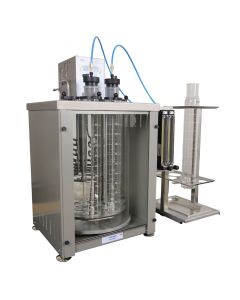
General
ASTM D1881 is a standard test method for determining the foaming tendency of engine coolants and aqueous heat transfer fluids. The test evaluates the tendency of a coolant to form foam when air is introduced under controlled laboratory conditions. Excessive foaming can reduce cooling efficiency, promote coolant loss, and impair the performance of automotive and industrial cooling systems. The method is widely used for product development, quality control, and specification compliance.
Precision
ASTM D1881 includes repeatability (r) and reproducibility (R) values established through interlaboratory testing. Reliable results depend on proper control of air flow, temperature, test duration, and the cleanliness of the glassware and diffuser. Consistent operating conditions are essential to achieve the precision specified in the standard.
Test
The method determines the foaming tendency and foam stability of an engine coolant by measuring the foam produced during aeration and the foam remaining after a specified settling period.
Reported results:
- Foam volume after aeration
- Foam volume after settling
Unit:
- Millilitres (mL)
Lower foam volumes and rapid foam collapse indicate better anti-foaming performance and are desirable for efficient cooling system operation.