


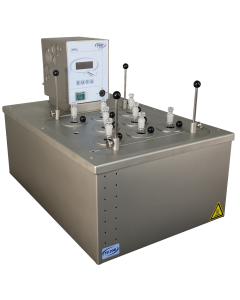
General
ASTM D3231 is a standard test method for determining the phosphorus content in gasoline. The method is applicable to phosphorus concentrations ranging from approximately 0.2 to 40 mg/L. Measuring phosphorus is important because excessive phosphorus can poison automotive catalytic converters and increase vehicle emissions.
Test
Organic matter in the sample is decomposed by ignition in the presence of zinc oxide. The residue is dissolved in sulfuric acid and reacted with ammonium molybdate and hydrazine sulfate. The absorbance of the Molybdenum Blue complex is proportional to the phosphorus concentration in the sample and is read at approximately 820 nm in a 5 cm cell.
Precision
ASTM D3231 provides established repeatability and reproducibility values based on interlaboratory testing. The precision depends on the phosphorus concentration, providing reliable and consistent results for quality control and regulatory compliance within the specified measurement range.
|
P Range, mg/L |
Repeatability |
Reproducibility |
|
0.2 to 1.3 |
0.05 |
0.13 |
|
1.3 to 40 |
7 % of the Mean |
13 % of the Mean |