


General:
The test covers a simple beaker-type procedure for evaluating the effects of glycol-based electric vehicle coolants on metal specimens under controlled laboratory conditions.
The purpose is to screen coolant formulations and measures corrosion by weight loss of metal coupons
Test:
ASTM D8485 test specimens are 1 x 2 x 1/16 inches and have a 17/64-inch center hole.
Specimens are prepared in the same way as ASTM D1384 test specimens.
A standard ASTM D8485 test specimen set includes:
- Stainless steel (UNS 30400, Grade 304) specimen
- Aluminum (UNS A93003, 3003) specimen
- Copper (UNS C110000, C110) specimen
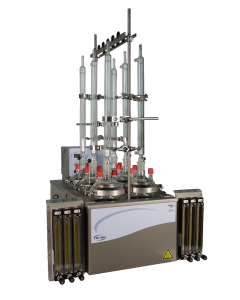
The ASTM D8485 is also known as the “Glassware Test” involves a controlled lab setup with the metal coupons immersed in coolant. Air is bubbled through the solution and the test duration takes 336 hours or 14 days.
Metals to be tested are Copper; Brass; Solder; Steel; Cast iron; Aluminum.
Precision:
Repeatability, reproducibility and bias are not established. An interlaboratory precision study has not been completed.