


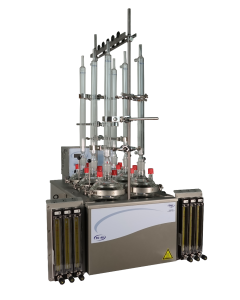
General
ASTM D1384 is a standard laboratory test method used to evaluate the corrosiveness of engine coolants and coolant concentrates toward the metals commonly found in automotive and industrial cooling systems. The method measures the corrosion effects on six standard metal specimens—copper, solder, brass, steel, cast iron, and aluminum—after prolonged exposure to an aerated coolant solution at elevated temperature. The test is widely used for product development, quality control, and specification compliance to assess the effectiveness of corrosion inhibitor packages.
Precision
The test includes repeatability (r) and reproducibility (R) limits based on interlaboratory studies. Precision is expressed as the mass loss of each metal coupon, with separate precision values specified for each of the six metals. The method provides good repeatability when test conditions, specimen preparation, and solution chemistry are carefully controlled.
Test
The test determines the corrosion resistance of engine coolants by measuring the mass loss of standard metal specimens after exposure under controlled laboratory conditions.
Reported result is the Mass loss for each individual metal specimen in unit Milligrams (mg)
Results are reported separately for copper, solder, brass, steel, cast iron, and aluminum. Lower mass loss values indicate better corrosion protection and a more effective coolant formulation.