


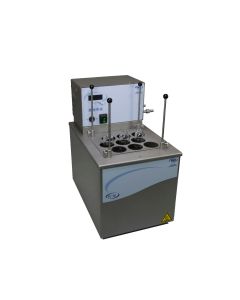
General
This test method is valid in the range from 0 to 30 % by volume. Equal volumes of hiel oil and water saturated Toluene are placed in each of the two cone shaped centrifuges. After centrifugation for 10 min at a rate to give between 500 and 800 relative centrigal force (rcf), the volume of the higher gravity water and sediment layer at the bottom of the tube is read
Test
The liquid sample is introduced into the pycnometer, equilibrated to the desired temperature, and weighed. The density or relative density is then calculated from this weight and the previously determined calibration factor, and a correction is applied for the buoyancy of air.
Precision
The criteria should be used for judging the acceptability of results (95% probability)
- Repeatability
The difference between two test results, obtained by the same operator with the same apparatus under constant operating conditions on identical test material, would, in the long run, in the normal and correct operation of the test method, exceed the values in Fig. 3 in only one case in twenty.
- Reproducibility
The difference between two single and independent test results obtained by different operators working in different laboratories on identical test material, would, in the long run, in the normal and correct operation of the test method, exceed the values in only one case in twenty.