


General
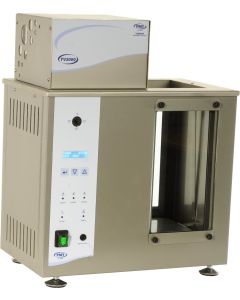
ASTM D1480 is a standard test method for determining the density and relative density (specific gravity) of viscous materials using a Bingham pycnometer. The method is particularly suitable for liquids that are too viscous for hydrometer testing, such as lubricating oils, petroleum products, resins, and other viscous chemicals. Measurements are performed at a controlled temperature to provide accurate and reproducible density values for quality control, product identification, and specification compliance.
Precision
ASTM D1480 includes repeatability (r) and reproducibility (R) statements based on interlaboratory testing. The method provides excellent precision when a calibrated Bingham pycnometer is used under controlled temperature conditions. Proper sample preparation, elimination of air bubbles, and accurate temperature control are essential to achieve the specified precision.
Test
The method determines the density or relative density (specific gravity) of a viscous liquid by measuring the mass of a known volume contained in a calibrated Bingham pycnometer.
Reported results:
- Density, kilograms per cubic metre (kg/m³) or grams per cubic centimetre (g/cm³)
- Relative density (specific gravity), Dimensionless (no unit)
Results are typically reported together with the test temperature (e.g., 15 °C, 20 °C, or 25 °C) to ensure accurate comparison with product specifications.