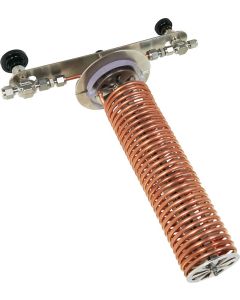
ASTM D2158 is a standard test method used to determine the non-volatile residue present in liquefied petroleum (LP) gases, such as propane, butane, and LPG mixtures. The method evaluates the cleanliness and purity of LPG by measuring substances that do not readily evaporate, including oils, polymers, compressor lubricants, and other heavy contaminants. These residues can cause deposits, foul regulators and burners, and lead to operational problems in LPG equipment.
This method evaluates the cleanliness and quality of LPG by measuring substances that do not readily vaporize. A LPG sample is condensated by refrigeration and evaporated under controlled conditions. The sample is refrigerated by means of a cooling coil to collect 100 mL of liquid in a weathering tube. The sample is than allowed to evaporate ( “weather") at ambient pressure under specified conditions. The remaining residuw is observed.
This method evaluates the cleanliness and quality of LPG by measuring substances that do not readily vaporize or nonvolatile residue:
Oils
Polymers
Contaminants or degradation products
These residues can cause operational issues in equipment like burners, regulators, and fuel systems.
Test:
LPG is evaporated under controlled conditions and the remaining residue is observed.
The sample is refrigerated by means of a cooling coil and collect 100 mL of liquid in a weathering tube, The sample allowed to evaporate ( “weather") at ambient pressure under specified conditions. Remaining residu is observed. and may be:
Weighed quantitatively, or
Visually assessed for appearance (e.g., oily film, particles)
Precision has not been determined on this method in terms of residue and oil stain results.