Standard Test Method for Density and Relative Density (Specific Gravity) of Viscous Materials by Bingham Pycnometer
It is commonly used for viscous liquids such as:
- Lubricating oils
- Bitumen and asphalt binders
- Resins
- Heavy petroleum fractions
- Some heat transfer fluids
What Does ASTM D1217Measure?
The ASTM D1217 determines:
- Density (mass per unit volume, e.g., kg/m³ or g/cm³)
- Relative density (specific gravity) at a specified temperature
Temperature control is critical because density changes significantly with temperature so the method requires a constant-temperature bath with tight stability.
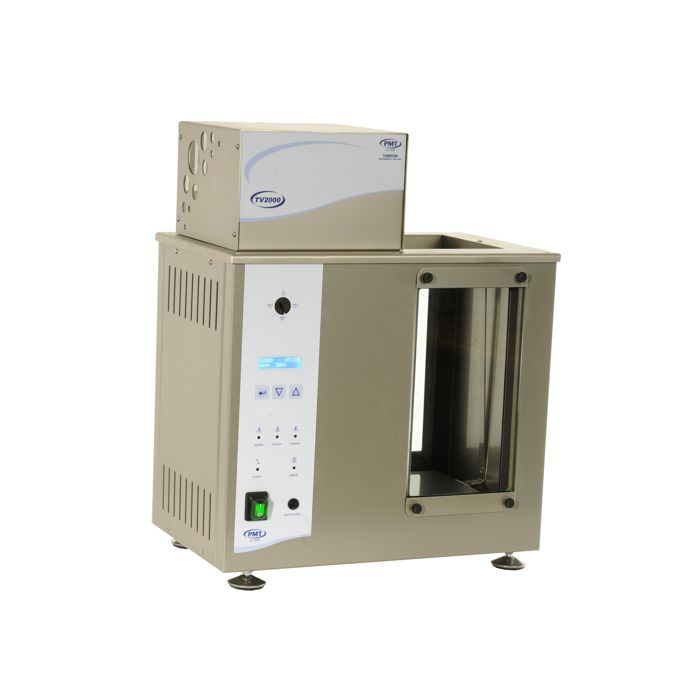
The Tamson TV2000 is designed for ultra-precise temperature control. The TV2000 is able to achieve a temperature stability of 0.01°C. The TV2000 is maintenance free and designed to run with minimal operational costs. The TV2000 can be operated from ambient +5 up to +230°C (..446°F).
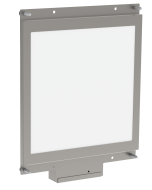
With the use of the built-in cooling coil, sub ambient temperatures down to +5°C can be achieved. Optionally, the bath can be equipped with a Z41 backpanel illuminator to improve visibility.
The TV2000 is available in the following voltages/frequencies:
- TV2000 230V/50-60Hz (P/N: 00T0782)
- TV2000 115V/60Hz (P/N: 00T0784)
See tab "More Information" for the specificationsheet and manual

Standard Test Method for Density and Relative Density (Specific Gravity) of Liquids by Bingham Pycnometer. The standard determine s density / relative density (specific gravity) of liquids.
The measuring principle is based on a calibrated glass bottle with capillary
Density determined from:
- Mass of liquid
- Precisely known volume
The method requires tight temperature control
It is mainly used for:
- Gasoline
- Jet fuel
- Naphtha
- Light petroleum distillates
- Other low-viscosity liquids
Designed for low-viscosity liquids
Typically used for products with:
- Vapor pressure not too high
- Kinematic viscosity generally below ~15 mm²/s at 40 °C
Measurement is usually done at:
- 15 °C
- 20 °C
- 25 °C
The test uses a Bingham pycnometer, a specialized glass density bottle designed for viscous materials.
Temperature control is critical because density changes significantly with temperature.
Common test temperatures:
- 15 °C
- 20 °C
- 25 °C
- 40 °C
- 100 °C (for some heavy materials)
The method requires a constant-temperature bath with tight stability.
The Tamson TV2000 is designed for ultra-precise temperature control. The TV2000 is able to achieve a temperature stability of 0.01°C. The TV2000 is maintenance free and designed to run with minimal operational costs. The TV2000 can be operated from ambient +5 up to +230°C (..446°F).
With the use of the built-in cooling coil, sub ambient temperatures down to +5°C can be achieved. Optionally, the bath can be equipped with a Z41 backpanel illuminator to improve visibility.
The TV2000 is available in the following voltages/frequencies:
- TV2000 230V/50-60Hz (P/N: 00T0782)
- TV2000 115V/60Hz (P/N: 00T0784)
The ASTM-D1217 compared to ASTM-D1480
| Fature | ASTM D1480 | ASTM D1217 |
| Instrument | Bingham pycnometer | Bingham pycnometer |
| Sample Type | Medium - High viscosity | Low - Medium viscosity |
| Accuracy | Higher | High accuracy - lab reference |
| Speed | Slower | Time consumig |
| Automation | Manual | Manual |
| Temperature snsitivity | ±0,01°C | ±0,01°C |
| Range | 100°C | 100°C |
See tab "More Information" for the specificationsheet and manual
| Bath_accuracy | 0.01°C |
|---|---|
| Bath Volume | 20 L |
| Bath height | 590 mm |
| Bath Width | 470 mm |
| Bath length | 350 mm |
| Bath Opening | 130 * 165 mm |
| Bath depth | 300 mm |
| Bath max temp | +230°C |
| Minimum Temperature | Ambient |
| Specification | click here |
| Manual | click here |
| Powerpoint | click here |